3D Rendering of a Room – Bringing Interior Design Concepts to Life
Interior design is all about transforming ideas into spaces that feel functional, comfortable, and visually appealing. However, the biggest challenge in the design process has always been communication. Clients often have difficulty imagining how a proposed room will look based on sketches or moodboards alone. This is why 3D rendering of a room has become an essential tool for interior designers, architects, and homeowners.
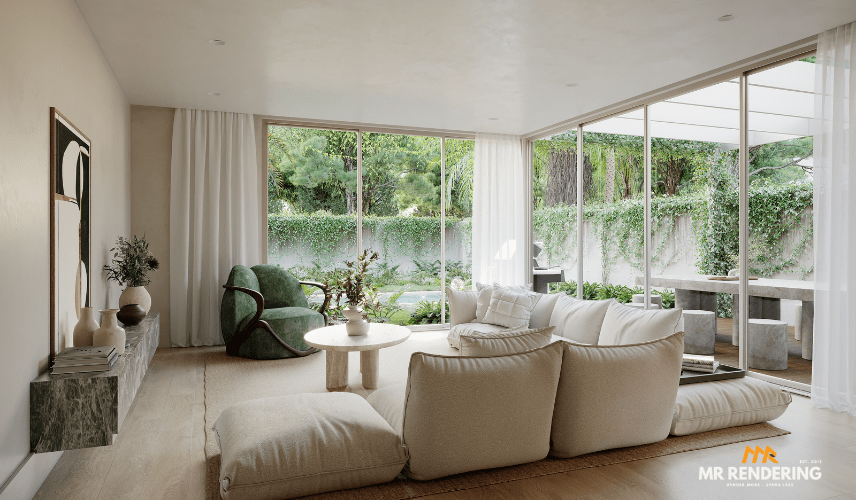
A realistic room render allows viewers to experience the full design concept before any construction begins. Colors, textures, lighting, and layout come together in a way that feels almost photographic. Because of this clarity, 3D rendering has completely changed how interior projects are presented and approved.
What Is 3D Rendering of a Room?
3D room rendering is the process of creating a realistic digital image of an interior space using advanced modeling and rendering software. The room is built in 3D, materials and furniture are added, lighting is simulated, and the final image is rendered at high quality.
The result is a visual that looks like a real photograph, even though the space may not yet exist.
Room rendering is commonly used for bedrooms, living rooms, kitchens, bathrooms, offices, retail spaces, and any environment where design details matter. It helps convey the design intent clearly, reducing misunderstandings and helping clients make confident decisions.
Why Room Rendering Matters in Modern Interior Design
There are several reasons why 3D rendering is now considered essential in interior design workflows.
1. Clear communication with clients
Many clients struggle to interpret 2D plans or visualize design ideas. A 3D render removes uncertainty by showing exactly how the finished room will look. This leads to faster approvals and fewer revisions.
2. Realistic representation of materials
Textures such as marble, wood, fabric, metal, and glass can be recreated with high precision. Clients can see how different materials work together and make informed choices.
3. Accurate lighting simulation
Lighting can completely change the feel of a room. 3D rendering allows designers to test natural light, artificial lighting, and various fixtures to find the perfect balance.
4. Ability to test multiple design options
Color schemes, furniture layouts, and décor variations can be tested quickly in 3D. This helps both designers and clients explore alternatives without costly physical mockups.
5. Ideal for marketing and portfolio building
Developers, designers, and real estate agents use room renders for brochures, websites, social media, and presentations. A beautifully rendered room instantly captures attention.
How MR Rendering Creates a Realistic Room Rendering
MR Rendering specializes in producing high-quality room renders for clients worldwide. Our workflow is designed to ensure accuracy, realism, and smooth communication throughout the project.
Step 1: Understanding your design concept
We begin by reviewing drawings, layouts, reference images, and moodboards. This helps us capture your vision clearly before the modeling stage begins.
Step 2: Building the 3D model
Walls, windows, ceilings, and structural elements are modeled in detail. Furniture and décor items are then arranged to match the desired style.
Step 3: Adding materials and textures
Each material—wood, stone, metal, paint, or fabric—is selected carefully to ensure accuracy. Texture mapping is refined to produce realistic reflections and shadows.
Step 4: Lighting setup
We simulate real-world lighting conditions, from natural sunlight to warm indoor lighting, to create the right atmosphere for the room.
Step 5: Rendering the final image
The scene is rendered using advanced rendering engines, producing high-quality, lifelike visuals ready for presentations or marketing.
Step 6: Revisions and refinement
We provide revisions to ensure the final result matches your expectations exactly.
Who Can Benefit from Room Rendering?
3D room rendering is widely used because it brings clarity and confidence to the design process.
Interior designers benefit by presenting concepts in a way that clients understand immediately.
Architects use room rendering to demonstrate interior layouts within larger architectural projects.
Homeowners rely on room renders before making renovation decisions, ensuring they select the right style, furniture, and materials.
Real estate developers use rendered interiors to pre-sell units by showing buyers how the finished space will look.
Furniture manufacturers also use rendering to showcase their products in realistic interior environments.
How Room Rendering Improves Decision-Making
Seeing a realistic representation of a room helps clients make faster and more informed decisions. They can evaluate the scale of furniture, the placement of décor, the color palette, and how materials harmonize together.
This reduces costly changes during construction and helps the project stay on schedule. Room rendering also minimizes miscommunication, which is one of the most common reasons for delays in interior design.
Trends in Room Rendering and Interior Visualization
Advances in technology are shaping how interior visualizations are created and used.
Real-time rendering tools now allow clients to view instant updates as designers change materials or furniture.
Virtual reality enables users to step inside a room and explore it at full scale.
Artificial intelligence is starting to automate parts of the creative process, including material suggestions and layout optimization.
These trends indicate that 3D visualization will only become more important in the design and real estate industries.
Why Choose MR Rendering for Room Visualization?
MR Rendering has over 15 years of experience delivering realistic interior renders for global clients. Our focus on detail, lighting accuracy, and design sensitivity allows us to produce visuals that support both design communication and marketing needs.
To explore our services, visit our home page.
To learn more about our background and team, visit the About page.
For project inquiries or pricing details, reach out through the Contact page.
Additional Learning Resources
If you want to explore related topics, you may find these resources helpful:
Learn about the principles behind design: Interior Design
Understand how visualization tools developed historically: Computer Graphics
Final Thoughts
3D rendering of a room has transformed the way interior spaces are planned, presented, and experienced. It bridges the gap between imagination and reality, helping clients, designers, and developers make confident decisions. As technology continues to advance, room rendering will remain an essential component of modern design workflows.
By visualizing an interior before any construction takes place, designers can refine ideas, reduce risks, and deliver results that match expectations. For anyone involved in creating or marketing interior spaces, room rendering is no longer optional—it is a necessity.
.png)


